Technology Artifact

Working in EdTech, I have acquired various software-related skills. For several years, I spent each day teaching others how to use software, helping them extract and use data, and troubleshooting problems with their browsers, computers, or the software itself. In addition, I picked up database management skills, dabbling in SQL, which is a database management system, Information Architecture, and even some programming.

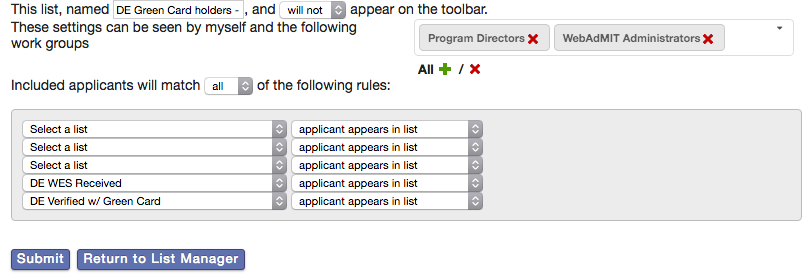
My first artifact is an example of a complex query known in the WebAdMIT software as a Composite List. It essentially creates a Venn Diagram of two separate queries. This is most useful when a query needs to be created that uses Any for some items and All for others, or when multiple data points create a certain condition, and that condition needs to be compared or overlapped with another condition. Below is an example of a Composite List that I created. The list queries all applicants to a particular nursing program that have a Green Card and have a WES evaluation received as part of their applications. The first screen shot is the Composite List itself. The next two screen shots show the individual simple Field Lists that are used in the Composite List. This query allows our admissions team to determine which International applicants are qualified to be admitted to that program.
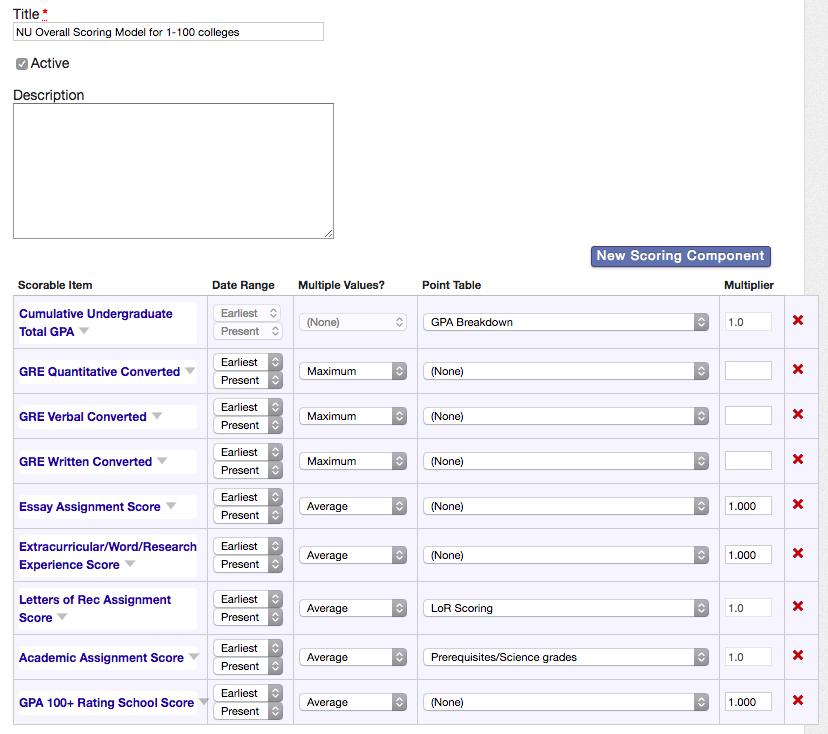
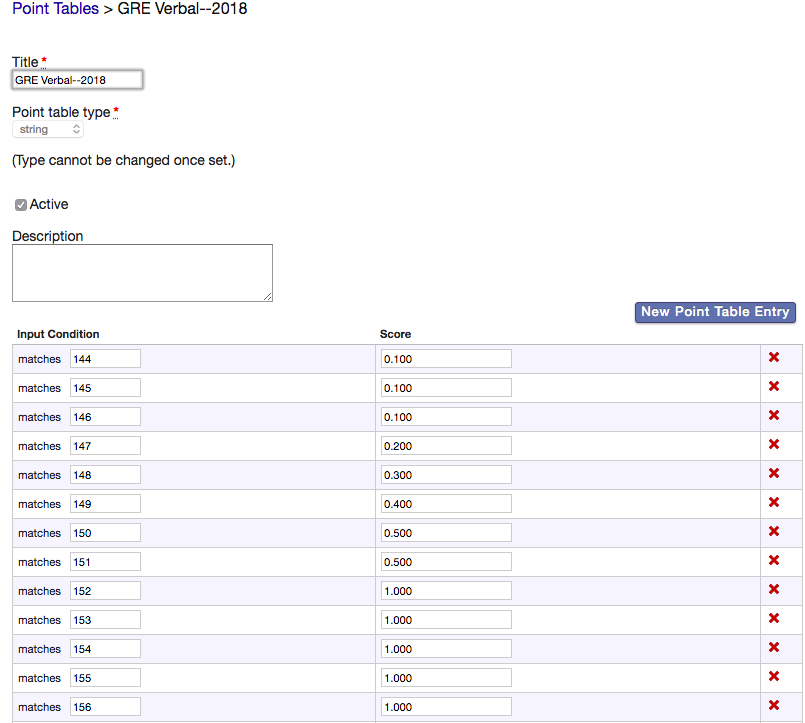
My second artifact showcases one of the most difficult technical skills I mastered: working with Scoring Models. Scoring Models are essentially algorithms. The user inputs each scoring component, or item needing to be quantified into the table. Then the user selects how each item will be quantified (e.g., sum, average, ect.) and the exact values that the model will be assigning to each component. Sometimes components have ranges of scores, such as GPAs and standardized test scores, in which values can be multiplied by the same number to get the assigned value. I assisted the Director of Northeastern’s Speech-Language Pathology master’s program to create the below Scoring Model, which is my second artifact. The first screen shot is the model itself, which was set up by the Director based on the components she needed. The second is two of the three point tables I set up for her to create the values for the GRE scores we receive for each applicant. The values generated for the GRE scores using the point tables factor into the Scoring Model as a whole. Based upon all the components we added, and their multipliers or point tables used, the model generates a single overall score based on a number of holistic dimensions. This overall score helps us determine which applicants would be the best fit for our SLP master’s program.
Technology

The Technology competency area focuses on the use of digital tools, resources, and technologies for the advancement of student learning, development, and success as well as the improved performance of student affairs professionals.

Thanks to my previous work experience in the technology sector, I believe that I will bring significant technological expertise to my student affairs work. I have surpassed most of the Intermediate mastery items listed on the ACPA-NASPA competency rubric for Technology other than Online Learning Environments. A significant part of my work in admissions involves using software to pull raw data and conduct an admissions process from start to finish, which entails training staff to use admissions software. I also find myself teaching colleagues in various departments how to complete basic technology-related tasks. I am one of the people in my office whom others seek out for support with hardware and software problems. I frequently find myself teaching my colleagues and supervisor how to use manipulate and interpret raw data.

The only aspect of the Technology competency area that I have not mastered at an Intermediate level is Online Learning Environments, because this involves teaching online course content. I have, however, met one Intermediate competency in this area: “Promote learning-focused interventions and student engagement via the design and assessment of outcomes that utilize social media and other digital communication and collaboration tools.” I find that work that involves the use of social media is a strength of mine.

As an early adopter of social media, I engaged with in this area of technology throughout my college years, into my graduate work, and beyond. In my spare time, I sing with Coro Allegro, Boston’s LGBTQ+ classical chorus. My volunteer role with Coro is serving as the Social Media Coordinator. I work closely with the director of the Marketing Committee to generate content for our Facebook, Twitter, and Instagram accounts. In this work, I meet the Advanced mastery skill of “[providing] leadership and ongoing training to colleagues… for the cultivation of an authentic digital identity, presence, and reputation that models appropriate online behavior”. I often find myself teaching my fellow choristers how to use these platforms. Primarily, however, by generating posts to be shared from our official Facebook Page and through my personal social media presence, I model effective and appropriate engagement in the discussion of difficult topics and the use of Internet humor. The Intermediate rubric item, “proactively cultivate a digital identity presence and reputation that models appropriate online behavior and constructive engagement with others in virtual communities”, is an important aspect of digital citizenship and one that I see my fellow choristers and my family members struggle with sometimes. This item is even more important when managing an organization’s Page or account. Cultivating a credible presence is as much about the aesthetics and tone of the account as it is about the content. I have been fortunate to be able to contribute to the Student Success Center’s account in my practicum at University of Massachusetts – Boston. Recently I researched types of Instagram posts appropriate to student affairs departments and made recommendations for the best ways to vary our content. I have also worked with an advisor to make images on Canva, a platform for creation of professional graphics for a number of uses.

            In order to move toward Advanced mastery of the Technology competency, I will need to take on leadership roles, as most Advanced rubric items involve leadership in some way. I do not see myself leading a department as a Director, however, I could still provide leadership in technology adoption and use if given the opportunity. I already possess the understanding of back-end interactions among Student Information Systems (SIS) to be able to recommend best practices and further technology adoption. In addition, my knowledge of cloud computing can help many departments transition to a more sustainable, paperless office model. I would be interested in learning enough coding to help develop online forms that could replace paper forms that various departments at both Northeastern and University of Massachusetts – Boston rely upon. I understand enough about student records, data use, and compliance to help with a paperless office transition. This would save time on the part of students, as well as the money and resources spent on paper forms. As climate scientists have recently warned (Joyce 2018), the time for adopting sustainable workflow practices is now. I stand ready to help with such an effort whenever an institution becomes ready for such a transition.