Working in EdTech, I have acquired various software-related skills. For several years, I spent each day teaching others how to use software, helping them extract and use data, and troubleshooting problems with their browsers, computers, or the software itself. In addition, I picked up database management skills, dabbling in SQL, which is a database management system, Information Architecture, and even some programming.
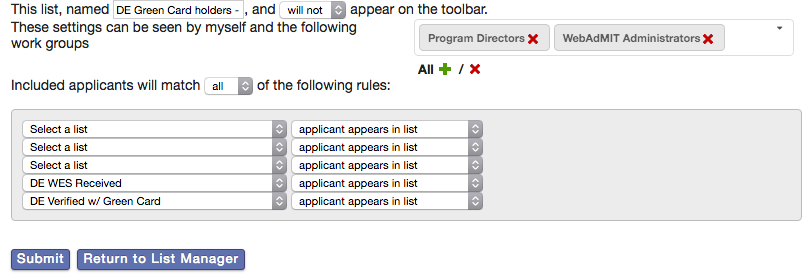
My first artifact is an example of a complex query known in the WebAdMIT software as a Composite List. It essentially creates a Venn Diagram of two separate queries. This is most useful when a query needs to be created that uses Any for some items and All for others, or when multiple data points create a certain condition, and that condition needs to be compared or overlapped with another condition. Below is an example of a Composite List that I created. The list queries all applicants to a particular nursing program that have a Green Card and have a WES evaluation received as part of their applications. The first screen shot is the Composite List itself. The next two screen shots show the individual simple Field Lists that are used in the Composite List. This query allows our admissions team to determine which International applicants are qualified to be admitted to that program.


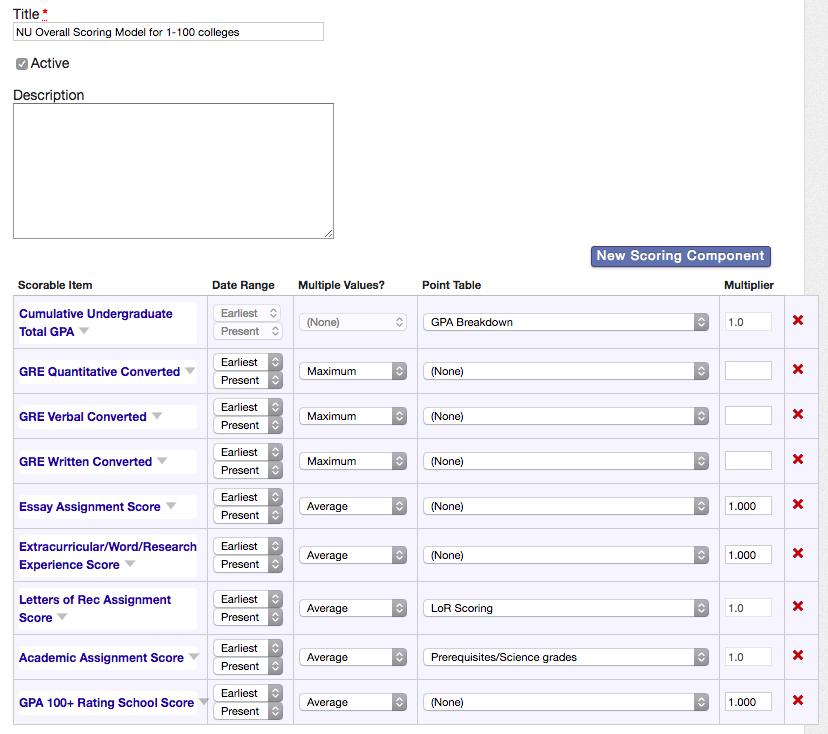
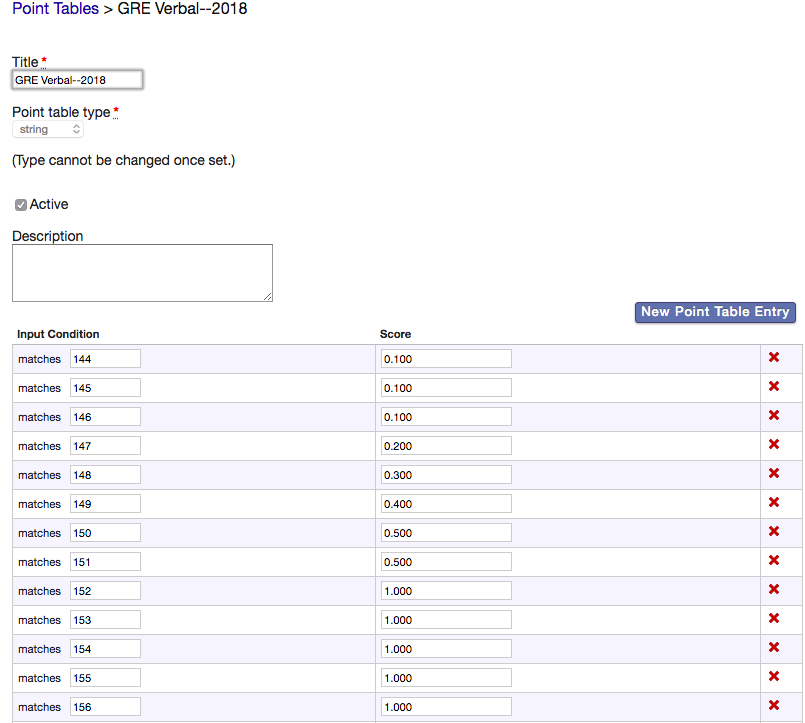
My second artifact showcases one of the most difficult technical skills I mastered: working with Scoring Models. Scoring Models are essentially algorithms. The user inputs each scoring component, or item needing to be quantified into the table. Then the user selects how each item will be quantified (e.g., sum, average, ect.) and the exact values that the model will be assigning to each component. Sometimes components have ranges of scores, such as GPAs and standardized test scores, in which values can be multiplied by the same number to get the assigned value. I assisted the Director of Northeastern’s Speech-Language Pathology master’s program to create the below Scoring Model, which is my second artifact. The first screen shot is the model itself, which was set up by the Director based on the components she needed. The second is two of the three point tables I set up for her to create the values for the GRE scores we receive for each applicant. The values generated for the GRE scores using the point tables factor into the Scoring Model as a whole. Based upon all the components we added, and their multipliers or point tables used, the model generates a single overall score based on a number of holistic dimensions. This overall score helps us determine which applicants would be the best fit for our SLP master’s program.